Wednesday, October 31, 2018

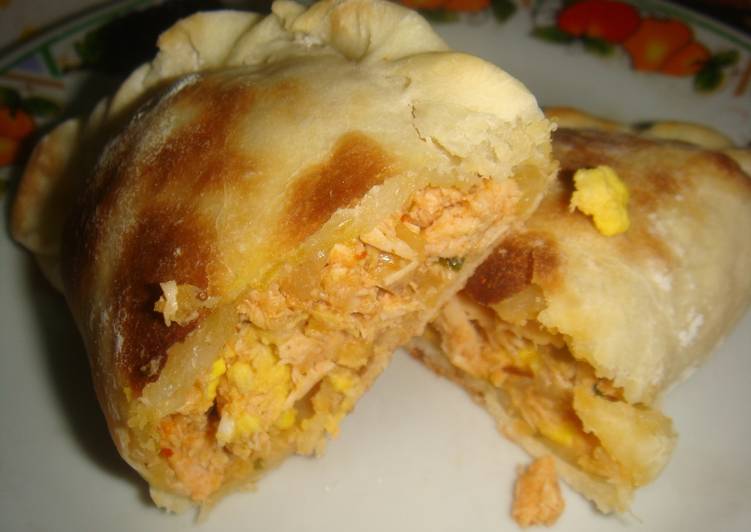
Aeropuerto Empanada

Image result for grande empanada con pollo receta

Cuenca excitement before noon:

Walked to the airport to pick up wife & daughter, who will be living with us & going to school at the Universidad de Cuenca. It's only 1.5 miles, no big deal anymore. Got there early and paid airport prices for breakfast in the waiting area: a big homemade-style chicken empanada (in-bread-ed), and cafe con leche (cf. lactos, galaxy) for $3.50. In small places like this, cafe con leche means a cup full of hot milk with instant coffee added to taste. Today they had added the coffee; other places may give you the instant in a little bowl. None of the dishes match; it's a thrifty country.

The restaurant business here is competitive (of course). Restaurants will often have a greeter outside with a menu. At the airport there are three little fastfood joints in a row. If they aren't busy like today, when someone comes in a worker will strike a Vanna White pose and feature the food, e.g., a platter of robust empanandas. No kidding, except for the unfancy attire, they look just like this:

Image result for game show hostess

The women said they prepared the empanada. I didn't ask if they made them at home, but I will next visit. The typical small eatery is a public space off of a domicile, so unless the restaurant is a full-blown business, the food is essentially home-cooked. In general, Ecuadorian food is seasoned, but not spicy. If you want spicy, you're better off at a Mexican restaurant. Yep, there are such things in Ecuador.

 I sat at a window-wall and had a lovely view across the runway of the nearby mountains. I watched the plane land, park right under my nose, and let Janet and Francie out. In the cab home I had a nice time defending the US not allowing folks to walk across the border. I pointed out that Ecuador doesn't allow it, even for starving Venezuelans. No ID, too bad; and this even though V and E have free-passage rules like say the US & Canada. Etc. Anyway that wasn't the only topic while the cabbie fought traffic, we had a pleasant visit.

 As we approached home the cabbie says, wow this is a nice neighborhood (which it is) and a nice big house (also true). I responded that we sold the house in the US and used that money to buy this house, and that it's the biggest, nicest house either of us has ever lived in. We think it's almost a palace. He thought that was interesting: that a gringo's house in Ecuador could possibly be nicer than its American counterpart. It was intended as a compliment of sorts, and I think he took it as such.

Thursday, October 18, 2018

The Glamorous Life of the Expat

We've had workmen in & out of the house for months, including times when we were out of town; nothing was ever amiss. We seem to be done with mods now, so it's time to get main locks changed.
I walked into Centro to a small locksmith shop (photo) that's across the street from where I pay the "light" bill. A few people were ahead of me, getting keys made. As it got to be my turn, a young man in an official jacket and big shoulder bag came in. He saw I was next- what did I need? Well, I need locks replaced on two steel gates at my house. We take off right then, a 15 minute walk up to the house. We have a nice conversation the whole way. This is the longest one-on-one chat I have had so far, it was pretty painless. While we are looking at the front gate, Mauro, my Italian neighbor, walks by, smiles & says hello. He's headed home from the tienda where he got his one cigarette for the day. Instead of saying 'como esta' I say 'como va su cigarillo/ how goes your cigarette?' He laughs, says 'muy bien!' and walks on.
Security locks can't be re-cored; the whole assembly has to be cut off each gate and new ones welded on. Apparently they are very hard to defeat. Total cost, $70, Patricio will come back tomorrow morning to do the job.
***************************************************************************
The new locks are in. Turns out they are welded to the backside of a plate that remains part of the steel gate, so from the front it's intact. The backsides need a little touch up painting. My house and its electrical system are 40 years old. I had to stand by the circuit breaker box, and every time the welding machine tripped the breaker I'd reset it. This was after switching off everything in the house including the fridges and computers. I turned it back on about 25 times.

Locksmith lower left. It helps to already know where it is.

Lluvia, lluvia, fuera de aqui!

Bourgeois life in Ecuador today:
I'm doing a crossword in the family room, which is a former courtyard with a glass roof. It's raining and I hear an unfamiliar drip sound. That is, as opposed to the usual drip sounds. Because the glass roof overlaps older tile roofs, two now-interior walls have gutters & downspouts. There's lots of rain-noise, but no leaks since we re-glassed the roof last Spring. I look around- don't see any issues.
But the the rain gets heavier, and the unfamiliar drip changes to a gush- water is pouring into the room from an overflowing gutter. But one can't see into either gutter from inside the room. I run up to the stairwell so I can look through its window into the stopped gutter from the outside. 


Nominal view of virtually-inaccessible gutter though stairwell window.


I can barely see a plastic bag, which has gotten into the gutter; no small feat considering the roof layout, but obviously not impossible. But I can't access the gutter from the outside- that would mean creeping over a 40-year-old terra-cotta roof. I run back inside, grab a stepladder. I can just squeeze two fingers into the gutter from the inside, and by feel pull out the bag. A mess, but not a catastrophe. Thank God that we were in Ecuador; that we were in town; that I was in the house; and that I was in the room to hear the trouble.


Interior gutter & downspout. Pushing hard, I could get fingers into the gutter from this side.
My whole life as a homeowner has been a war against water- either it's where I don't want it; or it's not where I do want it.
Rain, rain, go away!

Friday, October 5, 2018

Lingua Franca


First day in Stockholm (Winter 1988) I get my first real shot at using Swedish. At the bus stop I ask a woman which bus goes to the Krigsarkivet on thus & so street. She gives me an uncomfortable look, doesn't make a peep. Uh-oh. I ask again, carefully. She stays mum.
Then she says in English, "Do you speak English?"
"Yes, I do."
"I'm from Finland, I don't speak Swedish."
"Oh. Thanks."

I have Swedish on my mind a bit. A couple of weeks ago I was at Da Likka Sto' and overheard a couple of men discussing vodka in what sounded like Swedish or Danish. I asked them were they speaking one or the other, they said Swedish. They joked about being Scandinavians in the Vodka section. I said, "Jag talar inte bra Svensk. (I speak/talk not good Swedish)." That was unexpected! We all had a good laugh, and it was useful for me to say just that one sentence and be understood.

Never pass up a chance to practice a second language.


Friday, July 13, 2018

Equatorial Affliction

I bet he's got 'em

If you've read much English lit, you're probably aware of 'chilblains,' a cold-weather ailment of the extremities (ears, toes, etc.) with symptoms such as redness and itching.

Long ago at a sister's wedding, I spoke to her new English mother-in-law, who had attended boarding school in the foothills of the Indian Himalayas, where it was always cold. Sherpas would meet the girls at the train, and take them up to the school. Anyway, she said it was so cold all the time in the virtually unheated buildings that everyone had these bad rashes....she couldn't remember how they were called. I said, 'chilblains?' and she perked right up, yes indeed they were chilblains!


It's winter here in Cuenca, and our unheated house gets to about 64F during the day. Lately my second toes have been red and itchy with chilblains just like folks get in Charles Dickens novels, or Jane Eyre: "Our clothing was insufficient to protect us from the severe cold: we had no boots, the snow got into our shoes and melted there: our ungloved hands became numbed and covered with chilblains, as were our feet: I remember well the distracting irritation I endured from this cause every evening, when my feet inflamed; and the torture of thrusting the swelled, raw, and stiff toes into my shoes in the morning." I don't have chilblains that bad, but will be more attentive to keeping my feet warm. I've been in the habit of getting up, putting on boxer shorts and heading to the kitchen for coffee, not getting dressed for at least an hour or so. I hope that adding thick socks to that morning outfit will make for happier toes.

Monday, June 11, 2018

Franglishpañol


Recently I was in a discussion on workarounds, i.e. how to say what you mean in Spanish if you don't know the right words. For example, if I couldn't think of a Spanish counterpart to "fast," I'd say "velocidadamente," "no despacio", stuff like that. But part of my problem was thinking "fast." It's from the Germanic side of English, which doesn't have much in common with any Spanish words. On the other hand, ever since the Norman Conquest in 1066, English has had thousands of French words that often have a sibling or cousin in Spanish.
So for "fast," I should look for related French-English that might suggest a Spanish word. Quick? No. Speedy? No. Swift? No, all pre-French. Rapid? Rapido sounds good, yes, that works. This approach doesn't work every time, but it gets close often enough for me to stick with it.
Some examples that have worked for me, some spot on, others close enough on the fly:
height> altitude> altitud
wind> breeze> brisa
strength> force> fuerza
might> potency> potencia
smell, scent> aroma> aroma
easy> facile> facil
hard> difficult> dificil
hard> durable> durable, or duradero.
fear, fright> terror> terror
get> obtain> obtener
horse> cavalry> cavalo? Close, caballo.
likely> probably> probablemente
unbelievable> incredible> increible
friendly> amiable> amable
winner> victor> victor? Well, no. But the person I spoke to understood, and suggested ganador or vencedor.
sturdy> stable> stable? Close, estable.
stiff> rigid> rigido
sky> celestial> celesta? Close: celeste and celestial are adjectives. Cielo's the noun.
speed> velocity> velocidad
skill> ability> abilidad? Close, habilidad.
tired, weary> fatigued> fatigado.
weak> debilitated> debil.

Monday, June 4, 2018

Techos

My Neighbor the Tailor is roofing his house. I don't say re-roofing because this will be the first time the house will have tiles. Like our house, It's about 40 years old. Instead of a tiled roof, it has had corrugated fiber-cement boards that come painted in a terracotta color. They have about a 30-year lifespan if they are exposed to the weather. Here's a similar roof across the street:


Eventually they will leak and need to be covered or replaced. The direct sun and thin air is tough on them. It's very common here to build a nice house, and postpone the rooftile expense until the deck is so worn it needs protection. On my neighbor's house I'd say they replaced 25% of the deck as it was too beat-up by the elements to serve as a reliable substrate. I can hear the workers cutting out old deck right now.

Here's some of the new roof:


Viewed fullsize you can see each tile is an s-tile, i.e. each tile curves like an s in section. Its makes for a very clean appearance.

This is a roof on our house, built with traditional tiles. There are drain tiles and cover tiles, they don't install as easily as the more modern s-tiles, but I like the irregular presentation and glazing variations. Plus the draintiles aren't glazed, which adds some interest.


Tremors have caused some of the tiles to shift (most of them are friction-fit); those I can safely reach I've pushed back in place and sometimes applied some silicone to keep them there.

Here's the underside of our roof, semi-modern with small fiber-cement boards and rough lumber. A lot of light leaks in through the roof, but water doesn't. A full-on trad roof has no decking and a lot more wood, very labor-intensive. Plenty of older buildings have that, along with wattle-and-daub walls. Oddly enough, there's one a couple of doors down from me, it's the oldest structure in what's a relatively-new neighborhood. The wattle shows in places, but it's not bad enough yet to fix.


Even today this kind of semi-dimensional lumber is readily available along with bamboo. About a mile away there's a lumberyard that sells both.

The nicest trad roofs are heavy timber construction with cathedral ceilings. They tend to be small-span with no bottom chords. One of the additions to our house is like that:


Ours is the only heavy-timber roof I've seen with skylights. BTW, these aren't factory-made units, but panes of tempered glass built into the roof. Yep: no leaks.

BTW: τέκτων, tekton, Greek. A builder, especially a carpenter. Tectum, roof, Latin. Tetto, Italian. Toit, French. Techo, Spanish.