Showing posts with label Acts. Show all posts

Friday, April 13, 2012

One for Reading, One for Offering, One for Both


The April 11 class covered the Mass up through the Homily. The introductory first 30 minutes looked at some key parts of Acts 3-5:

Acts 3:1 Now Peter and John were going up to the temple at the hour of prayer...  [Being Jews, the apostles still go to the Temple.]

2 And a man lame from birth was being carried, whom they laid daily at that gate of the temple which is called Beautiful to ask alms of those who entered the temple. [Who does this sound like? The blind man! Yes, or? The paralyzed man. Yes, and then? Jesus will heal him! No, Jesus is in heaven. The apostles! Well, an apostle, which one? Peter! Yes, the #1 apostle. Who was also...the first pope. Yes.]

6 But Peter said, "I have no silver and gold, but I give you what I have; in the name of Jesus Christ of Nazareth, walk." 7 And he took him by the right hand and raised him up; and immediately his feet and ankles were made strong. 9 And all the people saw him walking and praising God... 11 While he clung to Peter and John, all the people ran together to them in the portico called Solomons, astounded. [The people are getting all cranked up like they would when Jesus did this sort of thing. And who is going to get aggravated? The Pharisees. Yes, and? The High Priest? Yes, the Temple staff.]

Acts 4:1 And as they were speaking to the people, the priests and the captain of the temple and the Sadducees came upon them, annoyed [aggravated!] because they were teaching the people and proclaiming in Jesus the resurrection from the dead. 3 And they arrested them and put them in custody... [That didn't take long.]

5 On the morrow their rulers and elders and scribes were gathered together in Jerusalem, 6 with Annas the high priest and Caiaphas and John and Alexander, and all who were of the high-priestly family. [There you go, all the aggravated bigshots!]

13 Now when they saw the boldness of Peter and John, and perceived that they were uneducated, common men, they wondered; and they recognized that they had been with Jesus. [Uh-oh...killing Jesus was supposed to fix this problem. Now it's worse!]

14 But seeing the man that had been healed standing beside them, they had nothing to say in opposition. "What shall we do with these men? For that a notable sign has been performed through them is manifest to all the inhabitants of Jerusalem, and we cannot deny it. 17 But in order that it may spread no further among the people, let us warn them to speak no more to any one in this name." 18 So they called them and charged them not to speak or teach at all in the name of Jesus. [So, do you think the apostles agreed to shut up about Jesus? No! Right!]

Acts 5:12 Now many signs and wonders were done among the people by the hands of the apostles. And they were all together in Solomon's Portico. [Back at the Temple again.]

14 And more than ever believers were added to the Lord, multitudes both of men and women, 15 so that they even carried out the sick into the streets, and laid them on beds and pallets, that as Peter came by at least his shadow might overshadow some of them. [I like how Peter's shadow 'overshadows' people to heal them. Tell me about some other overshadowing y'all know. The Holy Spirit overshadowed Mary. Yes, good. Who told her? Umm...Gabriel! Yes. Another overshadowing?  The angels' wings over the Ark? Yes, the cherubims' wings. Any more? Remember the Shekhinah? The cloud over the Tent! Yes. Now Peter mediates God's power such that he can overshadow, too.]

17 But the high priest rose up and all who were with him, that is, the party of the Sadducees, and filled with jealousy 18 they arrested the apostles and put them in the common prison. [Now they are past just talking tough.]

19 But at night an angel of the Lord opened the prison doors and brought them out and said, 20 "Go and stand in the temple and speak to the people all the words of this Life." [Now who else did God tell to 'Go and stand in the temple and speak to the people'? Jesus? Well, Jesus did that without being told. But who did God tell...no guesses, that's ok: Jeremiah.]

[The next day]...the captain with the officers went and brought them, but without violence, for they were afraid of being stoned by the people. 27 And the high priest questioned them, 28 saying, "We strictly charged you not to teach in this name, yet here you have filled Jerusalem with your teaching and you intend to bring this man's blood upon us." 29 But Peter and the apostles answered, "We must obey God rather than men." 33 When they heard this they were enraged and wanted to kill them. [Who are you reminded of? Jesus! Yes.] 

[After] they had called in the apostles, they beat them and charged them not to speak in the name of Jesus, and let them go. [The Temple staff is aggravated enough now that the apostles may be beaten up or thrown into prison or even killed if they keep blabbing about Jesus in the Temple or synagogues.]

All of that intro is to show the kids that the New Covenant Jewish Christians aren't going be accepted by the wider Old Covenant Jewish community, and wind up going their separate way. They were used to attending Synagogue on Saturday, where they'd read or hear Scripture, pray, sing Psalms and hymns, and listen to the Rabbi comment on the readings. On Sundays at people's houses they'd remember Easter, the Last Supper,  and Jesus' sacrifice. But that pattern has to change. 

"OK, let's draw a picture of the Temple...here's the courtyard where Isaiah, Jeremiah, Jesus and the Apostles would annoy the Levites. But the Christians aren't welcome there anymore; they're too annoying. And here's a Synagogue. Christians can't go there anymore either. But that's fine, they have a New Covenant and a new Lamb anyway. So what do Christians do when peoples' houses become too small for the congregation? They build a church? Yes. Here ya go. So over here are the Old Covenant buildings, and the church is...the New Covenant building. Yes. And what happens in a Catholic church is the New Covenant version of what happened the Old Covenant synagogues and the Temple. So- what happens in a Catholic church? Funerals? I mean on Sundays. Mass. Yes. The Mass combines the synagogue and the Temple. 

"What happens in a synagogue? They read and sing? Yes, and pray; and then the Rabbi...juggles? No, he talks about stuff. Yes, usually he would comment on the readings. And do we do that in church? Yes. Right, in the first half of the Mass. 

"And at the Temple? People sacrifice?  Yes, usually...a...Lamb! Yes, remind me though: what happens to the Lamb first? They kill it. Yes, then? They offer it. Yes. At Mass we don't kill the Lamb though, we just...offer it? Yes, like Jesus offered himself at...the Last Supper! Yes, good. That's the second half of the Mass.  


One for reading, one for offering, one for both.

"Now that we know the Old Covenant background, let's see how the New Covenant Mass works. Instead of using the Bible we'll discuss bits from this Missal. So what's the first thing that happens at Mass? The priest comes in! No! We sing! No! The bell rings! Yes........"

Saturday, March 10, 2012

The Apostles' Crab

(This post links to RAnn's Sunday Snippets)


Ready...set...CRAB! Yaaaah! Arrrgghhh!


Some highlights from the March 7 class, the Resurrection through Paul's commission. The Bible wants to tell the story, so I let it. All verses were already highlighted in my lecture Bible. I didn't flip back to actually read the John da Baptis' quote, that's something we covered a few months ago.  The kids just needed to hear it on the fly this time. Otherwise readings are from the last bit of Luke, the last bit of John, and Acts starting at Chapter 1. Almost no flipping back & forth. Easy.

On Easter morning Mary Magdalene didn't recognize the resurrected Jesus:

 "... she turned round and saw Jesus standing, but she did not know that it was Jesus. Jesus said to her, "Woman, why are you weeping? Whom do you seek?" Supposing him to be the gardener [?!], she said to him, "Sir, if you have carried him away, tell me where you have laid him..."

The apostles didn't recognize Jesus either:

"That very day two of them were going to a village named Emmaus, about seven miles from Jerusalem,  and talking with each other about all these things that had happened. While they were talking and discussing together, Jesus himself drew near and went with them. But their eyes were kept from recognizing him."

and

"Just as day was breaking, Jesus stood on the beach; yet the disciples did not know that it was Jesus."  Of course if I were freed from the consequences of Sin, you might not recognize me right away either.

On Easter evening, the Apostles were scared:


Who's there?

 "On the evening of that day, the first day of the week, the doors being shut where the disciples were, for fear of the Jews, Jesus came and stood among them...he breathed on them, and said to them, "Receive [an extra dose of] the Holy Spirit. If you forgive the sins of any, they are forgiven; if you retain the sins of any, they are retained."

Jesus is establishing what sacrament? Confession? Yes, good.

Over the next 40 days, Jesus pops in and out of spacetime to visit occasionally with the apostles; they are still a bit vague about Scripture and prophecy and all that stuff. Jesus helps them out :

"O foolish men, and slow of heart to believe all that the prophets have spoken! Was it not necessary that the Christ should suffer these things and enter into his glory?"  And beginning with Moses and all the prophets, he interpreted to them in all the scriptures the things concerning himself."

and

 "These are my words which I spoke to you, while I was still with you, that everything written about me in the law of Moses and the prophets and the psalms must be fulfilled." Then he opened their minds to understand the scriptures..."

 Regardless, the apostles remain unclear about the Messiah business. Still expecting a David:

"Lord, will you at this time restore the kingdom to Israel?" Poor guys need some direction.

And they're at loose ends. Some return to their old jobs:

"Simon Peter, Thomas...the sons of Zebedee, and two others of his disciples were together. Simon Peter said to them, "I am going fishing." They said to him, "We will go with you." They went out and got into the boat; but that night they caught nothing."

But John da Baptis' had foretold:

 "...he will baptize you with the Holy Spirit and with fire." Huh...that might be motivating.

Before ascending, Jesus & Peter orally re-establish Peter's contract to be the #1 person in charge of the flock:

Jesus said to Simon Peter, "Simon, son of John, do you love me more than these?" He said to him, "Yes, Lord; you know that I love you." He said to him, "Feed my lambs." A second time he said to him, "Simon, son of John, do you love me?" He said to him, "Yes, Lord; you know that I love you." He said to him, "Tend my sheep." 17 He said to him the third time, "Simon, son of John, do you love me?" Peter was grieved because he said to him the third time, "Do you love me?" And he said to him, "Lord, you know everything; you know that I love you." Jesus said to him, "Feed my sheep."

Jesus ascends to heaven, and won't return until the Second Coming. Peter starts taking charge in Jesus' absence, figures out the apostles need to replace dead Judas:

"Peter stood up among the brethren (the company of persons was in all about a hundred and twenty), and said... "one of the men who have accompanied us during all the time that the Lord Jesus went in and out among us, beginning from the baptism of John until the day when he was taken up from us--one of these men must become with us a witness to his resurrection."

So if an apostle dies...you make another one! Yes. Peter quotes King David to reinforce the idea that being an apostle is a kind of office:

"his bishoprick let another take."

They tentatively pick two disciples, Barsabbas and Matthias.  But the the apostles lack a certain confidence, and leave the final choice to the Holy Spirit:

"And they cast lots for them, and the lot fell on Matthias; and he was enrolled with the eleven apostles." What's "casting lots"? Like rolling dice? Yes, or flipping a coin.

As soon as there are 12 apostles again, they all get yet another extra dose of the Holy Spirit:

"When the day of Pentecost had come, they were all together in one place. And suddenly a sound came from heaven like the rush of a mighty wind, and it filled all the house where they were sitting. And there appeared to them tongues as of fire, distributed and resting on each one of them. And they were all filled with the Holy Spirit and began to speak in other tongues..."

The apostles were FIRED UP! like so:

 they ain't scared no more


"Hey, do you boys know what a crab pose is...what bodybuilders do? Me! Me too! Good...nobody else? Can y'all do a crab? Yes! OK y'all two get up here. Don't crab 'til I tell ya. Now after the apostles got their third dose of the Holy Spirit at Pentecost, did they continue to lock themselves up and hide? No! So what did they do instead? They went everywhere & told people about Jesus! That's right...they were fearless, they went all over the place spreading the Gospel and  setting up the Church. All but John were martyred, so they were way-tough guys. Now you two are gonna show everyone how tough and fearless and motivated and fired-up the apostles were. Ready...set...CRAB! Yaaaah! Arrrgghhh! Great job! Just look at these super apostles! OK...that's enough crabbing...y'all can sit down now."

Saul the Christian-hater is personally visited by Jesus, but that doesn't prepare him to do anything. Instead he's blinded. His sight is restored by an authorized Christian doing what? Touching his eyes! Great guess, but no! Laying hands on him! Yes! Are y'all surprised? No! Smarties.

"The Lord said to him in a vision, "Ananias." And he said, "Here I am, Lord." (Who said that to God in the Old Testament? Samuel! Yes! How many times? Three! Yes!)  And the Lord said to him, "...inquire...for a man of Tarsus named Saul; for behold, he is praying, and he has seen a man named Ananias come in and lay his hands on him so that he might regain his sight." So Ananias departed and entered the house. And laying his hands on him he said, "Brother Saul, the Lord Jesus who appeared to you on the road by which you came, has sent me that you may regain your sight and be filled with the Holy Spirit." And immediately something like scales fell from his eyes and he regained his sight. Then he rose and was baptized."

Saul and Barnabas are "set apart" like Samuel and Samson and John:

"Now in the church at Antioch there were prophets and teachers, Barnabas, Simeon... Lucius of Cyrene ...and Saul. 2 While they were worshiping the Lord and fasting, the Holy Spirit said, "Set apart for me Barnabas and Saul for the work to which I have called them." What sort of Catholic persons are set apart today for special work? Priests? Yes, and...nuns?  Yes, good."

The "prophets and teachers" lay hands on Saul and Barnabas:

"Then after fasting and praying they laid their hands on them and sent them off." Hey, guess what a bishop does when he makes a man into a priest? Lays his hands on his head? Yes, good. 

Only after this laying of hands is Saul now known as Paul. He has a new name like who else? Abraham & Sarah. Yes, and ...Isaac! No, but you mean Jacob. His name was changed to...starts with an 'I' like Isaac...Israel! Yes, and...Peter! Yes, which means...rock, yes, or...stone. Yes, like the cornerstone. And in Spanish? Piedra. Yes. Pedro is the piedra.

That's it for tonight. Next week we'll see how the apostles and Paul continued to spread and organize the Church.

Praised be Jesus Christ!

Now and Forever!

Thursday, June 2, 2011

Top Three Ax


This post got my attention recently: list your three favorite Bible verses. I tried picking three; couldn't do it.

I decided to set a lower standard for myself and pick three favorites from the Ax of the Apostles, which coincidentally are discussed in Catechism class...which makes this a catechetical post.  Here they are, the Top Three Ax:

"And when they had appointed elders for them in every church, with prayer and fasting they committed them to the Lord in whom they believed." (Ax 14:23)

Paul and Barnabas did not allow the new flocks to hire their own shepherds. Paul and Barnabas appointed shepherds for them (although the congregations could propose candidates). As God spoke through Jeremiah: "I will give you shepherds after my own heart, who will feed you with knowledge and understanding," and "I will set shepherds over them who will care for them, and they shall fear no more, nor be dismayed, neither shall any be missing, says the LORD."

"For it has seemed good to the Holy Spirit and to us to lay upon you no greater burden than these necessary things" (Ax 15:28)

The Apostles, Paul, Barnabas, and the elders meet in Jerusalem, and decide on their own authority that clear Scriptural instructions about the necessity of circumcision (and other observances) simply do not apply to Christians, thus rendering whole swathes of Exodus, Leviticus, Numbers, and Deuteronomy null and void. And to top it off, this proto-Magisterium also confidently says the Holy Spirit agrees with them! The effrontery! The authority! Take that, you newly-baptized Pharisees!

"And God did extraordinary miracles by the hands of Paul, so that handkerchiefs or aprons were carried away from his body to the sick, and diseases left them and the evil spirits came out of them."  (Ax 19:11)

Can Sacraments really be more than symbols? Can they effect spiritual changes in those who receive them? How about relics? Is there any value in a saint's clothes or body parts? This post-Ascension passage suggests there is.

In conclusion, picking 3 verses only from Ax was harder than I expected.

I know that's not much of a conclusion, but school's out for the summer.

Monday, March 28, 2011

Rags & Aprons

continued from the prior post


One more bit from Acts of the Apostles and we'll move on. I need volunteers. I need... a mother! That's you! And if I need a mother...you need a father! Yes, you, sitting right next to mom. And this [I put my rubber fetus on mom's desk] is your little girl. But it's not born yet! Well, pretend she's been born and she's bigger. It looks weird. She looks just like you did when you weren't born yet, so stop whining. How old are you? 12. Then pretend it's your 12-year-old-daughter. And I need a St. Paul...yes, come on up here. Now, mom & dad, your daughter is deathly sick. But look, who's in town? St. Paul? Yes. St. Paul, show the rest of the class your preaching skills, but silently...that's it, bring them the Good News. Parents, what are you going to do about your dear, sick little girl- stay home and pray? No, we're going to take her to St. Paul so he can lay hands on her! Great plan parents, but your daughter is so near death you don't dare move her.  Here you go mom, one of your dishrags [an old rag from my house] from the kitchen, don't argue! But what is- be patient, mom! Father, your wife has to stay home with your daughter, but she's giving you the dishrag...go on, hand it over. Father, what are you gonna do? Mmm...take it to Paul? Well, go on, time's a wastin'. St. Paul, here comes the sick girl's daddy [Paul takes the rag, wads it up in his hands a few times and hands it back]. What now, dad? [He goes back home and gives it to the mother] Well, mom? [She covers the baby with the rag] Somebody tell me what happens? The baby gets better! Yes indeed she does! Why? 'Cause the rag had touched Paul! Yes! Acts says, "God did extraordinary miracles by the hands of Paul, so that handkerchiefs or aprons were carried away from his body to the sick, and diseases left them and the evil spirits came out of them." By the way, back in the Book of Exodus, how'd the Israelites get water in the desert? Moses hit the rock with a stick! How'd Jesus heal the blind man? Put mud on his eyes! How'd the old woman with the bleeding problem get healed? She touched Jesus's clothes! Yes, a tassel, the littlest piece of his cloak. How do we get sins washed away? With water! How do we eat Jesus? Bread and wine! Yes, when they become...body'n'blood! Yes; is any of this stuff magic? No! God's power goes through the stuff, because we are made of a...bodynsoul, yes, so even today Jesus still comes to us spiritually, and...physically! Yes.

Now tell me about this rag, which is not a magic rag. Do you think it might heal someone else later on? I guess so. Sure, there's no rule that says God's power is exhausted with that one healing; who knows, maybe people's faith could keep it charged up like a holy battery. [Out comes the chicken bone] It might work like Elisha's bones, which did what? Make that man come back to life when they threw him on the bones. Yes, and even though Elisha had been dead for a good while, nothing but bones, God's healing still went through his dead body parts. That's why Catholics respect the bodies of saints; or even parts of their bodies, like this bone.

That's it for Acts of the Apostles. But let's recall how Paul would come to a new town, and set up a new church. I'm Paul, y'all are the congregation of new Christians; some Jews, some Gentiles. OK y'all, I have to bring the Gospel to another town now; goodbye, flock! Is there anything missing? You have to lay hands on somebody! Yes. Can y'all recommend anyone? Him. OK, let's see, your name is... Timothy! [I lay hands on Timothy] Timothy, I give you my authority to shepherd this flock, and pray that you be strengthened by the Holy Spirit. 'Bye now, I'll probably never see y'all again.

Things may go fine for a while for Bishop Timothy, but problems will will likely arise. The Jewish Christians might insist that the Gentiles quit eating pork. Or some Gentiles might want to sacrifice an animal to Zeus every now and then just to be on the safe side. Or they might disagree about keeping the Sabbath on Sunday, in honor of Easter, instead of Saturday. Timothy, do you want to figure this stuff out on your own? No! So what's the fix? Can you come back? No, sorry, I'm far across the sea. Flock, how can I give Timothy some guidance? Well...could you write him a letter? Yes, geniuses, that's exactly what Paul did! In fact, St. Paul wrote two letters to Timothy, called the First and Second letters to...Timothy. Yeah...another gimme.

The Greek word for letter is epistoli [on the board] (επιστολή, fyi); what is it in English? Epistle. Yes. Let's look briefly at the Epistles, which follow Acts in the New Testament. Paul wrote most of the Epistles because he set up so many new congregations which then needed his instruction. But other apostles wrote letters, too, such as Peter and James. Let's look at a few things in the Epistles before we move on; we'll see more of the Epistles when we learn about the Mass in a couple of weeks.

To start, here's a short bit I like from the Letter to the Hebrews: "Therefore, since we are surrounded by so great a cloud of witnesses, let us also lay aside every weight, and sin which clings so closely, and let us run with perseverance the race that is set before us..." The part I like is the "cloud of witnesses." What's a witness? Someone who sees what happens? Yes, and if the witnesses are in a cloud, what are they? People flying? No, it's more like when a cloud took Jesus to Heaven...what sort of witnesses would be on those clouds? Oh...angels? Yes, and...saints! Yes. I like this passage because it reminds me that we're never alone [I look around the room at the top of the walls]; we're surrounded by these cloud-witnesses..hey y'all, how ya doin'? That's funny. Hey, I'm serious, they're here. The angels & saints love us and want us to get to heaven, too. That's why you have a guardian angel, and should have a patron saint by the time you're confirmed. They want to help you "run the race." Anyway, I especially think about the cloud of witnesses at Mass. Remembering the statues in church, what witnesses in particular might be with us at Mass? Mary?  Yes, and? Joseph?  Yes, and? Angels. Yes. A priest was ordained at church a few years ago, and I imagined all the saints packing the church that day. What a cloud of witnesses that was. By the way, where do you usually hear about witnesses? When people have a jury? Yes, in court. Sometimes guilty people don't want a witness to testify, and the witness may be murdered if they won't keep quiet. The Greek word for witness is martyr [on the board]. Why do we call some saints martyrs? 'Cause they were killed? Yes. Martyrs, God's witnesses, were, and still are, being killed because they won't keep quiet about Jesus. You mean like today? Yes, even today Christian witnesses are martyred for their faith.

Now I need someone to tell me what Jesus taught about the hungry and the naked and the sick and so forth. We have to give them clothes! Yes, clothe the hungry, and- no, feed the hungry! Oh, OK, and...clothe the naked. Yes, and...visit sick people. Yes. That's because Jesus doesn't just care about what you believe, but also...what you do! Yes, your works. And in the Epistle St. James wrote, he says, "What good is it, my brothers, if a man says he has faith but has not works? Can his faith save him? If a brother or sister is ill-clad and in lack of daily food, and one of you says to them, "Go in peace, be warmed and filled," without giving them the things needed for the body, what good is it? So faith by itself, if it has no works, is dead." St. James means we have to act...in...faith! Yes. He goes on: " Was not Abraham our father justified by works, when he offered his son Isaac upon the altar?"  Tell me about it. God had to make sure Abraham believed in him. Yes, and how did God make sure? He let Abraham almost kill Isaac. Yes. And finally James writes, "You see that a man is justified by works and not by faith alone. For as the body apart from the spirit is dead, so faith apart from works is dead." So we can't say "la-la-la, I believe in Jesus" and do nothing; we have to act...in faith. Yes.

Speaking of body and soul separating, tell me about that bit in Isaiah when the angel put the burning coal on Isaiah's unclean lips? It cleaned his lips! Yes, so he...could...say good things!  Yes, so he could speak for God. What do we call it when something's burned 'til it's clean and pure? Purgatory! Close...it's called purging, but that's where the word Purgatory comes from. The angel told Isaiah, "see, your lips are purged." Now let's look at something Paul wrote about burning away the bad in order to save the good. It's in the first epistle he wrote to the flock in Corinth, Greece, who were...Corinthians? Yes. It's from First Corinthians. Paul says that each one of us is a part of the spiritual building of the Church; and that the building's foundation is Jesus.

Paul writes, "Now if any one builds on the foundation with gold, silver, precious stones, wood, hay, straw...each man's work will be made known..." So Paul is comparing our work, what we do, to different stuff, like so [on the board]:

Gold
Silver
Gems
Wood
Hay
Straw

The best work is...at the top, yes, and the junk, the sins...at the bottom. Yes. Paul says our works "will be revealed with fire, and the fire will test what sort of work each one has done." Starting at the bottom, tell me what to erase...straw, hay and wood!...yes, when our works are tested by fire. And what doesn't burn up? The good stuff. Yes, the good things we do. Paul writes, "If any man's work is burned up, he will suffer loss; though he himself will be saved, but only as through fire." So the bad things we do will get burned off, and we'll be saved "as through fire." What happens to saved people? They go to Heaven? Yes. So what's the place where we have our sins burned away and we're saved through fire? Purgatory? Yes. But it's not physical fire: where are our bodies if our souls are in Purgatory? In the ground! Yes! So Purgatory's only a spiritual purging, which might still be painful.

 Hey, if your body and soul are separated at death, what eventually has to happen? They get put back together again? Yes. The last book in the Bible, the Book of Revelations, talks about that. We'll learn about that book next week. Yes? Is next week the end of class? No, we'll still have 3 classes on the Mass; your suffering doesn't end until the last week of April.

Praised be Jesus Christ!

Now and Forever!

Class over!

Saturday, March 26, 2011

Bishops & Epidemics


Last week we saw how the apostles set up the Church so that it would keep running after they all died. Let's look at a picture of that [I draw]. Here's Jesus...and somebody else. What's Jesus doing? Laying his hands on the other guy!  Yes, is Jesus laying hands on a monkey? No, an apostle! Yes. Remember, the Bible doesn't say whether or not Jesus laid his hands on the apostles to give them his authority; but that was the standard Old Testament way to do it. I don't want to draw all 12 apostles...which apostle do you think this one is? Peter! Yes, because Jesus changed Simon's name to...Peter, yes, and because Jesus told only Peter to...feed...his sheep! Yes. So Peter represents all 12 apostles in this picture. Now Jesus goes to heaven [Jesus is erased]. The apostles know they're going to die, so...they lay hands on other people. Yes, just like the way Paul laid his hands on Timothy and Titus, who became...shepherds! Yes, what's the church word for them, you had it last week...bishops! Yes. 

So who is this guy [I draw] with this pointy hat? A bishop. Yes, and he's got his bent stick, a crook...because...he's the shepherd! Yes, a shepherd. And the apostles get old....and...they die! Yes [apostle is erased], but it's OK, because...they made bishops. Yes, and when these bishops get old...they make more bishops! Yes, all the way down to today. And bishops also make...more bishops? No, I mean besides more bishops. Who runs our parish, the bishop? Does he run around the state every Sunday saying Mass as fast as possible in all the churches? Ha, no! So, who takes of business at the parishes? Oh, the priests! Yes, bishops make priests...by...laying hands! Yes, and anointing.

But what about Peter? Huh? Peter got special authority from Jesus...and he died...so...they made another Peter? Yes, what do we call his office? What do we call men who replace Peter? Popes? Yes, popes. But when St. Luke was writing Acts of the Apostles, was St. Peter dead yet? No. Right, he was alive and doing things that Luke wrote about. So there's nothing in there about replacing Peter in particular; it wouldn't have come up yet.

And remind me, where'd Peter get his authority? Jesus. And when Peter died, was that it? Did his authority disappear? No, they picked another pope. Yes. By the way, in Rome they don't say Pope, they say Papa [on the board]. Why is that? Because he's the father? Yes again, and because fathers have authority....trick question: what language does 'Papa' come from? Latin? Good guess. It's Greek, the Romans got it from the Greeks! But yes, the Pope is the Holy Father, the Papa. In Italy, Greece and Spain they still say papa for pope.

Time for some more Greek...what do you use to see things far away? A telescope? Yes; in Greek it's spelled like this: teleskopos [on the board] (τηλεσκόπος, fyi).  And to see very small things? A microscope! Yes; mikroskopos [under teleskopos] (μικροσκόπος, fyi). And to see out of a submarine? A periscope! Yes; periskopos [under mikroskopos] (περισκόπος, fyi). 

So what does tele mean? Far away? Yes, and mikro? Small! And peri? Up? Good guess; it means around. On subs they use the periscope to look around. And skopos? See! Yes [on the board]! My, my, geniuses at work; how'd y'all learn all this Greek? We're smart! Uh-huh.

What's an epidemic [on the board] (επιδημία, epidimia)? When everybody gets sick! Yes. Epi-demic is Greek for over-people [over goes under epi]. It's a disease that's over all the people.

Now I write epi-skopos [under Papa] (επίσκοπος, fyi).

OK, what's epi mean again? Over! And skopos? To see! And if someone is an epi-skopos what are they? Umm...an over-seer? Yes, genius! [overseer goes next to episkopos] And is an overseer a monkey that gets told what to do? No, he's the boss, he tells the monkeys what to do!  Yes. An episkopos, an overseer, is someone who is in charge. Who's in charge of our diocese, all the Catholics in South Carolina? Bishop Macaroni! That's very funny, his name is Guglielmone, goo-lyel-MO-neh. It's Italian. But we're not talking about Italian tonight, we're talking about...Greek! That's right.

Now watch the magic finger [I erase episkopos down to piskop]; how do we say episkopos in English? Umm, bishop? Yes! ¿Quién aquí habla Español? Me! How do you say bishop in Spanish? Obispo?  Yep. 'Obispo' comes from episkopos, too [bishop and obispo go beside piskop]. Some Bibles say 'bishop' and some say 'overseer,' but it's the same job: being a bishop.

Y'all can see how the old word episkopos changed into the new words over 2,000 years. That's how old the office of Bishop is, about 2,000 years old. The New Testament talks about bishops a lot, and what language was the NT written in? Greek! Yep. And the Old Testament? Hebrew! Yes, mostly Hebrew; you remembered.

Bishops are so important to the church that the word bishop shows up in the New Testament six times, which shows you that there were bishops even before the Bible was finished. Now, there are Christians who go to churches that don't have bishops. They may tell you bishops aren't necessary, or are just overseers, nothing special. But appointed bishops are in the Bible, so the Bible agrees with the Church.

OK let's review a bit, who's in overall charge of feeding the sheep of Jesus' flock while he's away? The Pope! How do we say that in Greek? Papa! And who helps the Papa take care of the flock? Bishops! And what's 'bishop' mean? Overseer!  Yes. And next come what the Bible calls 'presbyters.'

I have presbyopia [on the board]; I can't see stuff close-up anymore. Presbyopia is Greek, it means old-eye. What might 'presby-' mean?  Old?  Yes, old. The Greek word for an old man, an elder, is presbyteros [on the board under 'episkopos,' restored from 'piskop'] (πρεσβύτερος, fyi). You may remember St. Paul and the apostles didn't just appoint bishops, but also elders. Presbyteros is a very old word, a few thousand years old or so. We use it all the time in English but it's changed so much we don't recognize it anymore. It's gotten shorter, look: [I rub letters out of presbyteros so that it reads presbyter--]. That's like what word? Presbyterian?  Yes. But it got even shorter: [more rubouts] pres--ter. Nowadays it's real short: pres--t...what's that word now? Is it priest?  Yes, good. So when we say 'priest' we also are saying....elder? Yes. Some Bibles will say 'presbyter;' some will say 'elder.' Hey, who's the President? Obama? Yes, where's he from, a big city....Washington? No, where's he from? Umm, Chicago? Yes, Chicago. In Chicago's government they elect elders, who are right under the mayor. They call them 'aldermen', it's just a way to say 'elder-men'. Kind of like the way our priest-elders are under the...bishop? Yes.

Now remember last week we learned from Acts that when the apostles were first setting the Church up in Jerusalem, they needed help feeding widows and orphans. They appointed men who would help them serve the tables. In Greek, the word for that kind of Church helper is diakonos [on the board under presbyteros] (διάκονος, fyi). What do we- deacons! Yes, we call them deacons. They assist at Mass, baptize, and marry people; they help the priests and bishops, just like in the apostles' day.

So these are all the offices of the Church; say 'em in English from the top: pope...bishop...priest...deacon. Yes. The Catholic Church has all of these offices, but other churches don't.

What church's name sounds like episkopos? Episcopal? Yes. Who do you think is in charge of that church? Umm...bishops? Yes. They don't accept the Pope's authority, which Jesus gave to Peter.

How about presby- Presbyterians! Yes, do they have bishops? No. Right; Presbyterian churches have elders and deacons, but not bishops and popes.

And last are churches that don't have elders but have...deacons? Yes. For example, most Baptist churches have a Board of Deacons which run each church.

So tell me, which Church has all the offices that we see Jesus and the apostles setting up in the New Testament? The Catholic Church. Yes.


class continues in the next post

Friday, March 18, 2011

Building the Church

 This post is linked to Sunday Snippets

Y'all remember from last week Jesus rose from the dead on...Easter Sunday, yes, and after a certain amount of time...40 days, yes again, will go to...heaven. Yes. Let's look at two more things Jesus did before He "ascended to His Father."

What did the apostles do for a living? They were apostles. I mean before they followed Jesus, what did they do? What did Peter do? He was a fisherman. Yes. They were regular guys with regular jobs, not Scripture experts like the scribes, priests, and Pharisees. So after Jesus was alive again, "beginning with Moses and all the prophets, he interpreted to them in all the scriptures the things concerning himself." Jesus had to explain to the apostles how prophecies (like all the Christmas prophecies) made by men such as Isaiah were true about Jesus.  "...he said to them, "These are my words which I spoke to you, while I was still with you, that everything written about me in the law of Moses and the prophets and the psalms must be fulfilled." Then he opened their minds to understand the scriptures..." I don't think they would have figured it all out on their own.

Remember that even though the Risen Jesus was on earth between Easter and the Ascension, he wasn't here the whole 40 days, only occasionally. And He didn't give the apostles clear instructions about what they should be doing. They were at loose ends. One evening Peter was with some of the disciples. "Simon Peter said to them, "I am going fishing." They said to him, "We will go with you." Doesn't that sound sad? "Guess I'll go fishing, go back to my old job..."

"They went out and got into the boat." How many fish do you think they caught? Not any! Yes. "...but that night they caught nothing. Just as day was breaking, Jesus stood on the beach; yet the disciples did not know that it was Jesus. Jesus said to them, "Children, have you any fish?" Well? No! Right. "He said to them, "Cast the net on the right side of the boat..." Then what? They caught a lot! Yes! "So they cast it, and now they were not able to haul it in, for the quantity of fish." Then they recognized Jesus- why? 'Cause they caught all the fish. Yes; it was like the first time Peter met Jesus three years before, after fishing all night and catching nothing.

After they got all the fish to shore, they had breakfast with Jesus. Remind me, on the Thursday night Jesus was arrested, what did Peter do when people recognized him as a friend of Jesus? He said he wasn't His friend. Yes, how many times? Three! Yes, which means Peter...broke...the contract! Yes: "I ain't no Rock, I'm Silly-Putty!" Poor Peter. But "When they had finished breakfast, Jesus said to Simon Peter, "Simon, son of John, do you love me more than these?" He said to him, "Yes, Lord; you know that I love you." Peter is so sorry he abandoned Jesus. How many times...three!  yes, Jesus asked Peter three times. And how many... three times!  yes, three times Peter said he loved Jesus. Which means? They have the contract again. Yes, in front of witnesses. And each time Peter said he loved Jesus, Jesus said  "Feed my lambs." So the contract is pretty specific now. Who is the Good Shepherd? Peter! Is he? ...no, Jesus is! Yes! Is Jesus going to be around much longer? No! Where's he going? Heaven. And while Jesus will be away he...puts somebody in charge! Yes. By the way, did Jesus give all the apostles his authority to forgive sins? Yes? Yes, they were all together in one room when he breathed on them. But did Jesus tell them all to feed his lambs? No, just Peter. Yes, Peter is the #1 apostle-in-charge.

That's the end of the Gospels.

The next book in the New Testament is about the acts of the Apostles, the things they did. What's the name of this book?  The Acts of the Apostles? Yes. Whatta gimme that was. As we know from the Gospels, Jesus has resurrected, but he really belongs in...Heaven. Yes. Chapter 1 of Acts says: "So when they had come together, they asked him, "Lord, will you at this time restore the kingdom to Israel?" See, even after all this Resurrection business, the apostles are still expecting Jesus to restore the kingdom that had been built by...King David, yes, and...King Solomon. But Jesus wants them to quit obsessing about politics.  "He charged them not to depart from Jerusalem, but to wait for the promise of the Father, which, he said, "you heard from me, for John baptized with water, but before many days you shall be baptized with the Holy Spirit." "...you shall receive power when the Holy Spirit has come upon you; and you shall be my witnesses in Jerusalem and in all Judea and Samaria and to the end of the earth." And when he had said this, as they were looking on, he was lifted up, and a cloud took him out of their sight." Bam, just like that, gone.

Imagine the apostles standing there, with their mouths open, gaping at the sky: wow...wouldja just look at that. "And while they were gazing into heaven as he went, behold, two men stood by them in white robes..." who would be...angels? Yes. They said, "Men of Galilee, why do you stand looking into heaven? This Jesus, who was taken up from you into heaven, will come in the same way as you saw him go into heaven." How did Jesus go up? On a cloud. So how will he come back? On a cloud? Yes, we assume so: "in the same way."

The apostles went back to Jerusalem and waited for the Holy Spirit. In the meantime, they had a problem. How many apostles were there? Twelve? Oh. Who betrayed Jesus, a monkey? No, Judas! Yes, who was a monkey? No, an apostle! And Judas the slimy traitor was still part of the Apostle Club? No, he killed himself. Yes, so how many ap...eleven! Yes, there were only eleven apostles now. How many should there be? Twelve. So they have to...make another apostle? Yes. "Peter stood up among the brethren..." see, Peter's in charge; and he says, "May another take his office." Tell me, if my brother dies, can I get another brother? No. But if the mayor or the president dies, what then? We get another one. Yes. Being a mayor or a president makes someone an office-holder. Even if the person in the office dies, the office goes on. And Peter says being an apostle is an office, so they should get another. "So one of the men who have accompanied us during all the time that the Lord Jesus went in and out among us, beginning from the baptism of John until the day when he was taken up from us; one of these men must become with us a witness to his resurrection." They pick from the disciples who had been with Jesus the whole three years. "And they put forward two, Joseph...and Matthias. And they prayed and said, "Lord, who knowest the hearts of all men, show which one of these two thou hast chosen to take the place in this ministry and apostleship..." And they cast lots for them, and the lot fell on Matthias; and he was enrolled with the eleven apostles." Casting lots is like drawing straws or rolling dice. I think the apostles weren't too sure of themselves yet to just out-and-out pick someone.

Remind me how many days it was from Easter Sunday to the Ascension. 40. Yes. So the Ascension is always on a Thursday. There's another event 10 days after the Ascension...? What's 40 plus 10? 50. Yes. What's this called [I draw a pentagon]? A pentagon. Yes; P-e-n-t-e [on the board] means...five! Yes, so the the event 50 days after Easter Sunday is...Pentecost? Yes, Pentecost Sunday, it's the birthday of the Church; like the Last Supper was the birthday of the priesthood. Let's look at Pentecost now.

"When the day of Pentecost had come, they were all together in one place. And suddenly a sound came from heaven like the rush of a mighty wind, and it filled all the house where they were sitting. And there appeared to them tongues as of fire, distributed and resting on each one of them. And they were all filled with the Holy Spirit and began to speak in other tongues, as the Spirit enabled them to proclaim. "Y'all have probably seen paintings of the apostles with the little birthday-candle sort of flames above their heads...I think of them as getting FIRED UP! No more "Jesus, we're too scared to stick with you; Jesus, we're too tired to watch and pray; Jesus, which one of us do you like the best; Jesus, explain that to us again; Jesus, we don't know what to do next." Instead, like John the Baptist said, they were baptized with fire and the Holy Spirit. From then on they spread the Gospel, the Good News, fearlessly; so fearlessly that they were all eventually martyred except for John.

"Now there were dwelling in Jerusalem Jews, devout men from every nation under heaven. And at this sound the multitude came together, and they were bewildered, because each one heard them speaking in his own language. And they were amazed and wondered, saying, "Are not all these who are speaking Galileans? And how is it that we hear, each of us in his own native language?" People can't believe these hicks from Galilee know any foreign languages. This is one of their gifts of the Holy Spirit, to spread the Good News in other languages.

The Church started in Jerusalem. Before too long there got to be so many new Christians that the apostles needed some help with the daily work of the Church, such as feeding the poor. "And the twelve summoned the body of the disciples and said, "It is not right that we should give up preaching the word of God to serve tables. Therefore, brethren, pick out from among you seven men of good repute, full of the Spirit and of wisdom, whom we may appoint to this duty. But we will devote ourselves to prayer and to the ministry of the word." And what they said pleased the whole multitude, and they chose Stephen..." and six others. "These they set before the apostles" and what did the apostles do? Lay their hands on them! Yes!  "...they prayed and laid their hands upon them." They "handed" over some of their authority to these helpers.

Now let's learn about a man who is sometimes called the 13th apostle. His name is Saul...Yes? His name got changed to...Stop! Don't give it away yet! So, there was this man named Saul. He may have been a Pharisee: knew the Scriptures up and down, back and forth, way better than the apostles did. And he knew all the rules about the Sabbath and so forth. Well, Saul didn't like this new Christ-Messiah business that the apostles wouldn't shut up about. They were aggravating scribes, Pharisees and Levites at the Temple just like Jesus used to do! So Saul had it in for the Christ-followers, the Christians: "...Saul was ravaging the church, and entering house after house, he dragged off men and women and committed them to prison." And if that's not bad enough, he was there when Stephen, who was just made one of the apostles' helpers, was stoned to death. The book of Acts says "And Saul was consenting to his death."

Stephen is the first of many martyrs.

Then "...Saul, still breathing threats and murder against the disciples of the Lord, went to the high priest and asked him for letters to the synagogues at Damascus, so that if he found any belonging to the Way, men or women, he might bring them bound to Jerusalem." Saul wasn't satisfied with nailing Christians in Jerusalem; he had to go root them out in Damascus, which is still the capital of Syria, right next to Israel. "Now as he journeyed he approached Damascus, and suddenly a light from heaven flashed about him. And he fell to the ground and heard a voice saying to him, "Saul, Saul, why do you persecute me?" And he said, "Who are you, Lord?" So...who was it? Jesus? Yes. "I am Jesus, whom you are persecuting; but rise and enter the city, and you will be told what you are to do." The men who were traveling with him stood speechless, hearing the voice but seeing no one. Saul arose from the ground; and when his eyes were opened, he could see nothing; so they led him by the hand and brought him into Damascus."

Some paintings of the moment that Jesus appeared to Saul in that blinding flash of light show Saul knocked off a horse he had been riding. Acts doesn't say if he was on a horse or not, but I like the idea that Jesus knocked Saul off his high horse to get his attention and teach him some humility.

After a few days, Jesus sent a disciple named Ananias to heal Saul's blindness..how'd he do it? Laid hands on him! Yes. "Ananias departed and entered the house. And laying his hands on him he said, "Brother Saul, the Lord Jesus who appeared to you on the road by which you came, has sent me that you may regain your sight and be filled with the Holy Spirit." And immediately something like scales fell from his eyes and he regained his sight. Then he rose and was baptized, and took food and was strengthened. For several days he was with the disciples at Damascus. And in the synagogues immediately he proclaimed Jesus, saying, "He is the Son of God." Saul was converted to faith in Jesus in just a few days; of course having Jesus personally appear to Saul and knock him silly helped with that.

And today if someone has a rapid change of mind about something important, people will say they had a Damascus Road conversion.

Saul was such a great preacher about his new faith in Jesus that he aggravated people in Damascus; some were aggravated enough to...kill him? Yes. But his friends lowered him over the city walls in a basket, and he made it back to Jerusalem.  Saul needed some time to persuade the Christians in Jerusalem that he had had a change...of...heart! Yes, and that he could be trusted. But once the Church was satisfied, Saul and his friend Barnabas were sent out on their own:  "While they were worshiping the Lord and fasting, the Holy Spirit said, "Set apart for me Barnabas and Saul for the work to which I have called them." Then after fasting and praying they laid their hands on them and sent them off." Being "set apart" means Saul is especially dedicated to his job of evangelizing. In Saul's case being set apart meant that like Jesus, he never got married. What people are like that today? Priests? Yes, and ...nuns. Yes. Priests, nuns, and Saul all imitate...Jesus. Yes.

Now after Saul got hands laid on him and was set apart, the Bible never calls him Saul again. OK you can tell me, from now on he's called...Paul! Yes, his name was changed, like Simon's named was changed to...Peter, yes which means...rock, or...stone. Yes.

continued in the next post

Thursday, April 1, 2010

Presbyopia

This article is also available at the Amazing Catechists website.


Teaching the tired Wednesday-night crowd involves two overlapping issues: what material is going to be learned, and how to get the kids to learn it. The 'what' comes from the lesson plan which is done before class. The 'how' is more a matter of sticking to some rules (not for the kids...for the teacher) about keeping the kids engaged, such as:

A recap of where we left off last week, which leads into this week's topic.

Asking constant questions to elicit the children's participation and keep them alert.

Asking leading questions to steer the discussion.

Asking ridiculous questions to jolt their brains into an answer.

Refining a good rough answer into something more germane to the subject.

Giving an answer only as a last resort due to time considerations.

Regular encouragement for good efforts.

Review of past material as part of learning the new material.

Some repetition.

Connecting catechetical knowledge to the wider word of "regular" information.

A bit of concluding review.

Here's a recent bit of class that shows these concepts in action:

"Y'all remember last week we were looking in Acts of the Apostles to see how the the Apostles organized the Church after Jesus went up to heaven. Quick review now, instead of a President, congressmen, governors & mayors, the Church has other offices...what's the top office?  Pope.  Yes, what is it in Greek? Papa!  Right, the Father; and after the papa, there are... bishops. Yes, which in Greek is 'episkopos' (επίσκοπος, fyi), like telescope, periscope, and microscope, (far-see, around-see, little-see, fyi) and it means what?...the umm, the seer? Close...you remember, it's 'overseer'. Oh, yeah. C'mon say it, bishop means...Overseer! Yes.

Now we get to the next office in the church which is....? No guesses?  Who runs our parish, the bishop? Does he run around the state every Sunday saying Mass as fast as possible in all the churches? Ha, no! So, who takes of business at the parishes? Oh, the priests! Yes. Priests are next."

"Class, remind me please, who was going to sacrifice Isaac?  Abraham.  Yes, and who killed the ram instead? Well, wasn't it still Abraham?  That's right...just checking.  And who killed all those lambs at the first Passover?  Moses?  Moses ran around all night killing lambs?  Oh...it was the fathers or the grandfathers.  Yes, whoever was the oldest man in the family. Then later on out in the desert all the tribes but the Levites worshipped the Golden Roach, and...it was a Golden Calf!  Oh yeah, right, a calf...an image of a made-up Egyptian god.  Anyway, God said, "All you Calf-worshipers can't be trusted to make a proper sacrifice. From now on y'all have to pay the Levite men to do your sacrificing for you." That's why the book of Leviticus is full of blood'n'guts: the Levite elders offered sacrifices for a living. What do we call people who offer sacrifices? Umm, sacrificers? Well, that's not what I'm looking for. What's Fr. Newman's job? His job? Yeah, is he a bus driver? Ha, no he's a priest. OK then, what does he do at Mass? Do come along, we just learned this last month....the angel carries a pizza to heaven...oh, he offers bread and wine? No, he offers something better, not $10 worth of bread and wine...oh, Jesus' body and blood! Yes, the Paschal Lamb who was...sacrificed! Yes, so what do we call people who offer sacrifices? Umm...priests? Yes, all those Levite elders were priests; they offered sacrifices. Fr. Newman offers the sacrificed Jesus so he is...? A priest. If you don't offer sacrifices then...? You're not a priest! Yes."

"Hey, I read an interesting article today When You Can't Seem to Get Used to Bifocals - WSJ.com; here's the opening sentence:

"Presbyopia, which typically starts in the early-to-mid 40s, is an aging of the eye's lens that results in an inability to focus on nearby objects. Symptoms are blurred vision, a tendency to hold reading material at arm's length and headaches when doing close work."

"I have presbyopia [on the board]; I can't see stuff close-up anymore. Presbyopia is Greek, it means old-eye. What might 'Presby-' mean?  Old?  Yes, old.  The Greek word for an old man, the eldest, is Presbyteros [on the board] (πρεσβύτερος, fyi).  Remind me please, in the days of Abraham, and at the first Passover, who did the sacrificing? The fathers? Yes, the elders; and if they did the sacrificing then they were also...? Priests? Yes [on the board under presbyteros], but since being a priest wasn't a special job until the Israelites worshiped the Calf, they were just elders. If I fix a toilet at home, I'm not called a plumber, it's just something I do as the eldest man in the house. But if I make a mess and water sprays all over the place, my wife will be like God after the Calf: "You made such a mess I don't feel good about you fixing leaks anymore...I...want....a....? Plumber! Yes, who I have to pay!

So an elder who sacrifices is a plumber!  What? He's a priest!  Oh. Oh, yeah, an elder who sacrifices is a priest. Let's look at presbyteros again, what's it mean? Old man. Yes, let's say elder [on the board next to presbyteros] in this case. Presbyteros is a very old word, a few thousand years old or so. We use it all the time in English but it's changed so much we don't recognize it anymore. It's gotten shorter, look: [I rub letters out of presbyteros so that it reads presbyter--]. That's like the word Presbyterian. Presbyterian churches are run by elders but not bishops and popes. But it got even shorter: [more rubouts] pres--ter. Nowadays it's real short: pres--t...what's that word now? Is it priest? Yes, good (having the word 'priest' right under the diminishing 'presbyteros' means at least one child will get it quickly). So when we say 'priest' we also are saying.... elder? Yes, good. Hey, who's the President? Obama? Yes, where's he from, a big city....Washington? No, where's he from? Umm, Chicago? Yes, Chicago. In Chicago they elect elders, who are right under the mayor. They call them 'aldermen', it's just a way to say 'elder-men'. Kind of like the way our priest-elders are under the...bishop? Yes.

So, the top office is....?  Pope! Meaning...papa!  Next is...bishop!  Yes, meaning...overseer!  Yes, and next are...priests, yes again, which comes from the Greek word for...elder!  And who sacrificed the Passover lambs?  Elders!  Yes, geniuses, elders who functioned as priests!

This isn't the end of the discussion, which next treats deacons, and concludes with some comparison of the complete hierarchy of the Catholic Church (Jesus-Pope-Bishops-Priests-Deacons-laity) to other churches which have a partial heirarchy. But these few minutes should be adequate to show how the texture of the learning experience is determined by the teaching rules.

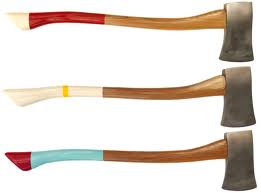
That pic at the top shows a recent archaeological discovery: the Ax of the Apostles.